


Table of contents

Key Takeaways
- Your car’s value depends on its age, condition, mileage, service history and current market demand.
- Online tools can provide a useful estimate, but the final selling price may vary by buyer and sales method.
- Private sales may return more, while trade-ins and car buying companies usually offer greater speed and convenience.
- Damaged, scrap and non-roadworthy cars can still have value based on parts, materials and salvage demand.
- Accurate vehicle details help buyers provide a more reliable valuation.
How much is my car worth?
There isn't a single answer to "How much is my car worth?" Your vehicle's value depends on its age, condition, mileage, service history and demand in the New Zealand market. Comparing recent sales, researching similar vehicles and requesting a quote from a buyer will give you the most accurate estimate.
Your car is worth what a buyer is prepared to pay in the current New Zealand market. That amount can vary depending on the vehicle’s age, condition, kilometres, service history and demand for that model.
Online car valuations and similar listings can provide a useful estimate, but they do not always reflect the final selling price. A private buyer, dealer and car buying company may each value the same vehicle differently because their costs, risks and resale plans are not the same.
The key factors that affect your car's value
| Factor | Impact |
|---|---|
| Age and model year | Newer vehicles generally retain more value. |
| Make and variant | Popular or well-equipped models may attract stronger demand. |
| Kilometres | Lower mileage can support a higher price. |
| Condition | Mechanical and cosmetic issues may reduce an offer. |
| Service history | Records can give buyers greater confidence. |
| WOF and registration | Current documents can make a sale easier. |
| Accident history | Major or poorly documented repairs may affect value. |
| Market demand | Popular vehicles may attract more buyers. |
| Selling method | Private, trade-in and direct-buyer prices can differ. |
How to check your car's selling value
There are several ways to estimate your car's value in NZ. No single method is completely accurate, so it's worth comparing different sources before setting a price or accepting an offer. Using a combination of online tools, market research and buyer quotes can help you better understand your car's current market value.
- 01

Use an online car valuation tool
A car valuation tool can provide a quick estimate based on your vehicle's make, model, year and other details. While useful as a starting point, remember that online estimates don't assess your car's exact condition or account for local demand.
- 02
Compare similar vehicles for sale
Browse marketplaces to see what similar vehicles are listed for. Compare factors such as mileage, condition, features, and location to understand where your car fits in the current NZ car market.
- 03
Request quotes from different buyers
Get quotes from dealerships, trade-in services, and car-buying companies. Comparing multiple offers gives you a better idea of your vehicle's market value and helps you identify the selling option that best suits your priorities.
- 04
Consider your car's condition honestly
Be realistic about any accident damage, mechanical issues or cosmetic wear. Providing accurate information leads to a more reliable valuation and helps avoid price changes later in the selling process.

Tip: Don't rely on advertised prices alone
Listed prices don't always reflect what a car eventually sells for. Buyers often negotiate, and some listings remain online because they're priced too high. Compare several sources and actual buyer offers to form a more realistic expectation of your car's worth.
How much can you actually sell your car for?
The amount you can actually sell your car for may differ from its estimated value. While online car valuations provide a useful guide, the final price depends on who you're selling to, how quickly you want to sell and the current demand for your vehicle in New Zealand.
Private sales may achieve a higher price
Selling privately can help you maximise your return because there is no middleman. However, you'll need to create listings, respond to enquiries, arrange inspections, negotiate with buyers and complete the ownership transfer yourself.
Trade-ins prioritise convenience
Trading your car in at a dealership can simplify the buying and selling process, but the offer may be lower than what you'd get in a private sale. Dealers generally factor in preparation costs, resale risk and their required profit margin.
Car buying companies focus on speed and certainty
Car-buying companies offer prices based on your vehicle's condition and current market demand. While the price may not always match the highest private sale, you avoid advertising costs, lengthy negotiations and uncertain buyers. For many sellers, the convenience and quick turnaround outweigh the possibility of waiting longer for a higher price.
Market conditions influence your final price
Seasonal demand, fuel prices, the popularity of certain vehicle types and the availability of similar models can all affect what buyers are willing to pay. Even if two cars are nearly identical, their selling prices may differ depending on when and where they're listed.
What's my junk, scrap or damaged car worth?
A junk, scrap or damaged car can still have value, even when it is no longer roadworthy or suitable for a private sale. What you can get for your car depends on its condition, make, model, age, location and whether usable parts can be recovered.
For a damaged car in New Zealand, the vehicle's value may come from more than just its resale potential. Buyers may consider the engine, transmission, body panels, wheels, electronics and recyclable metal. A newer car or a low-mileage car with repairable damage may be worth more than an older vehicle with major mechanical or structural problems.
The type of damage matters
Minor cosmetic damage may only slightly decrease value, while engine failure, flood damage, fire damage or a serious collision can make the car worth less. A car that’s complete and accessible may also attract a better offer than one with missing parts.
Repair costs affect the final offer
Buyers usually compare the cost of repairs with the car’s market value. If fixing the vehicle would cost more than its likely resale value, its salvage or parts value might be the more realistic measure of what the car is worth in NZ.
Usable parts can increase their value
Even when a car doesn’t run, valuable components may still increase the value of your car. Popular models with strong demand for replacement parts can sometimes achieve better offers than uncommon vehicles with limited parts demand.
Scrap value changes with the market
The worth of your vehicle may rise or fall as metal prices and local demand change. Its weight, material composition and collection location can all influence the estimate of your car’s worth.
Trade-in value may not reflect salvage value
Local car dealerships may offer little or no trade-in value for a badly damaged NZ vehicle. A specialist car buyer may assess your car’s value differently, considering parts, recycling, and salvage demand rather than showroom resale.
How to price your car (and maximise what you get)
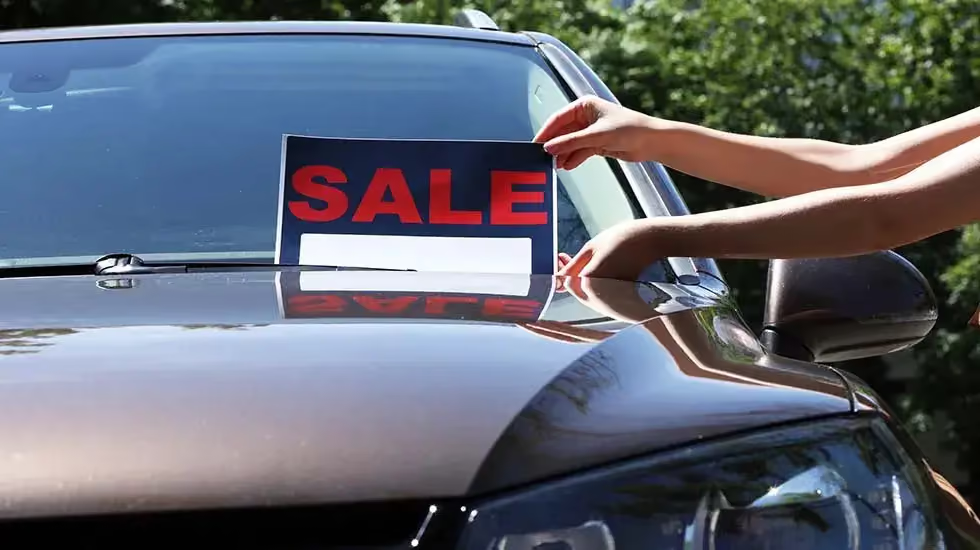
Setting the right price is one of the most important parts of selling a car in New Zealand. Price it too high, and you may struggle to attract enquiries. Price it too low, and you could miss out on money. Understanding your car's true market value helps you set realistic expectations and maximise your car's value.
Compare genuinely similar vehicles
Start by comparing vehicles similar to yours on marketplaces. Look at the make, model, year, mileage, condition and features rather than focusing on price alone. Online tools can help you build a realistic view of your car's worth, although advertised prices may differ from final sale prices.
Account for faults and wear
The value of a car in New Zealand depends on more than its age. A low-mileage car with a complete service history may be valued better than a newer car with accident damage or poor maintenance. Being honest about your vehicle's condition helps you set a fair price and build buyer confidence.
Calculate whether repairs are worthwhile
Small cosmetic repairs, a professional clean or replacing worn consumables may increase your car's value. However, expensive mechanical repairs don't always deliver a higher return. Before spending money, compare the likely increase in value with the repair cost.
Leave sensible room to negotiate
If you're listing your car privately, many buyers expect to negotiate. Setting a realistic asking price with a small buffer may help you get the best possible outcome while still remaining competitive in the current car market.
Choose a selling method that matches your priorities
The best way to sell depends on your priorities. A private sale may deliver the highest return but often takes longer. If speed and convenience matter more, a specialist car-buying company might be your best option. Selling your car in New Zealand through a direct buyer can also reduce the time spent managing enquiries, inspections and paperwork.
Find out what your car could be worth
Get a quick price for your vehicle without arranging inspections, negotiating with buyers or dropping it off anywhere.
How do car-buying companies determine their offer?
Car-buying companies use vehicle details, market data, and resale values to determine your car’s value. Their offer is usually based on the vehicle's current value, not the highest advertised price you may see on car sales platforms.
Understanding your car’s value is essential when comparing offers. A clear breakdown helps you see why one buyer may value your car differently from another.
Vehicle details and specifications
The make, model, year, variant, fuel type, and transmission all influence a car's value. Features such as Apple CarPlay, driver-assistance technology, upgraded interiors, or a higher specification can also increase a car’s value when buyers are actively looking for them.
Age, mileage and condition
A newer car with lower mileage will generally attract a stronger offer than an older vehicle with significant wear. Keeping your car well-maintained may support a higher value, while mechanical faults, body damage or a poor service history can decrease a car’s value.
Current demand and resale potential
Buyers assess how easily they could resell the car and what similar vehicles are achieving in the New Zealand market. Your vehicle’s value may rise when demand is strong or supply is limited, but it may fall when many comparable cars are available.
Repairs, transport and preparation costs
A buying company may need to collect, inspect, repair, clean, or advertise the vehicle before reselling it. These expenses are deducted when calculating the value for your vehicle, especially if it is damaged, unregistered or non-roadworthy.
Sales method and commercial risk
Offers also reflect the risk the buyer takes on. A company providing a quick, guaranteed sale may offer less than the possible private-sale price because it manages the paperwork, collection, preparation and uncertainty associated with buying or selling a car.
Accuracy of the information provided
To check your car’s value accurately, provide the correct mileage, WOF status, registration details, service history and information about any faults or accident damage. Clear photos can also help the buyer assess your car’s value before collection.
What information do you need for an accurate valuation?
An accurate valuation starts with complete, verifiable vehicle information. At this stage, the goal is not to re-explain what affects price, but to give the buyer enough detail to identify the exact vehicle and confirm its legal and ownership status.
1. Registration plate or VIN
The registration plate or Vehicle Identification Number helps the buyer confirm the vehicle’s identity, specifications and registration record. This is especially useful when different variants of the same model have different values.
2. Proof of ownership
You may need to confirm that you are the registered person or have the authority to sell the vehicle. This helps prevent delays and ensures the sale can be completed correctly. NZTA requires the registered person's details to be updated when a vehicle changes hands.
3. Current registration and WOF details
Provide the expiry dates for the vehicle’s registration and Warrant of Fitness. These details help the buyer understand whether the vehicle can be legally driven or will require collection.
4. Finance owed on the vehicle
Tell the buyer whether the car is subject to a finance or other security interest. Outstanding finance may need to be settled before ownership can be transferred.
5. Keys and access information
Confirm how many keys are available and whether the vehicle is easy to access for inspection or collection. If the car is stored in a garage, yard or restricted location, explain any access requirements.
6. Recent photos
Include clear images of the front, rear, sides, interior and dashboard. Photograph any visible damage separately so the buyer can verify the vehicle’s condition before making or confirming an offer.
7. Your location and preferred collection time
Provide the vehicle’s suburb or postcode and let the buyer know when it is available. Location can affect collection planning, while accurate timing helps avoid delays once the offer is accepted.
Selling with Sell My Salvage
- 01
Get a price
Tell us about your car online.
- 02
Accept the offer
Review and accept digitally.
- 03
Get paid
We arrange collection and payment.
FAQs
How quickly does a car lose value?
Most cars depreciate fastest during their first few years, then lose value more gradually. The rate varies by make, model, demand and running costs, so some vehicles hold their value better than others.
Do modifications increase a car’s value?
Not always. Practical or professionally installed upgrades may appeal to some buyers, while highly personalised modifications can narrow the market. Keep receipts and certification where relevant, as undocumented work may reduce buyer confidence.
Does the number of previous owners affect car value?
A long ownership history does not automatically make a vehicle worth less. However, fewer owners and consistent records may reassure buyers that the car has been maintained carefully and its history is easier to verify.
How long does a car valuation remain accurate?
A valuation is usually a snapshot of the market at that time. Mileage, condition, demand and comparable listings can change, so it is worth checking your car’s value again if you wait several weeks or months before selling.
Can I sell a car that still has finance owing?
Potentially, but the outstanding balance usually needs to be disclosed and settled as part of the sale. Contact the finance provider early to confirm the payout amount and the steps required to remove any security interest.
Is an online valuation the same as a guaranteed offer?
No. An online valuation is generally an estimate based on the details entered, while a guaranteed offer may require the information to be checked. Providing complete and accurate details reduces the risk of the price changing later.


.svg)